

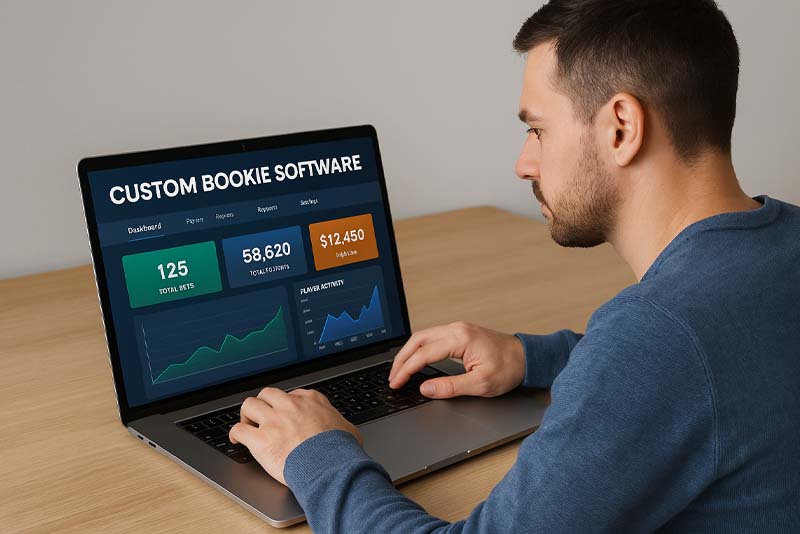
Running a sportsbook isn’t just about taking bets and balancing books. It’s about control — the kind that shapes profits, player experience, and long-term stability. That’s where custom bookie software changes the game. Instead of settling for generic pay-per-head (PPH) platforms that limit flexibility, serious operators are moving toward customized systems that reflect their exact needs and business goals.
Full Ownership and Control
Renting a platform with a PPH model is different from custom software ownership. The customization enables you to manage the odds, open markets, and determine what data to collect. It eliminates reliance on a vendor’s timetable.
Custom solutions enable operational autonomy. PPH system operators lack agility, since all books operate under the same template. Poor system customizability can leave you vulnerable if a competitor offers aggressive action management, provides localization, custom tiers, and adapts software to integrate client action.
True Brand Identity
Uniform systems in the pay-per-head model reproduce the same format for every sportsbook. Such an arrangement may suit the manager of an informal, minor operation, but for someone with ambitious growth objectives, this presents substantial challenges.
Tailor-made bookie applications enable you to command personalized branding from the logo to color palettes, through thematic interface adjustments, and the player portal. You cease to be just another “book” operating on an identical system. You become an identifiable and reputable brand, and this recognition drives customer loyalty, enhancing the efficacy of your promotional efforts.
Data Ownership and Player Insights
Data constitutes leverage. Each player activity– bets, deposits, time spent on site, and preferred sports – can disclose valuable and actionable patterns to assist in risk management and profit maximization. In a standard Price Per Head (PPH) setup, that data resides on another entity’s server. You may gain restricted and partial insight, but never the whole picture.
Custom systems allow for complete data ownership on a player basis. That data can be integrated within your CRM, payment processors, or utilized in marketing automation systems. You can generate bespoke reports that align with your decision-making process, rather than relying on standard reports from PPH. The benefits include operational efficiency and enhanced profit margins.
Scalability Without Hidden Fees
The PPH model charges scale by active player tally. It seems straightforward – pay only for what you use – but the model ultimately becomes restrictive. Hyper-growth may create significant weekly costs, presenting a situation where one is punished for success.
With bespoke solutions, you are profiting from an asset. There are no direct costs associated with growth when you expand to new markets, increase player counts, or onboard new agent networks, maximizing income potential. That kind of scalability is the foundation of enduring profitability.
Compliance and Security Advantage
The regulations governing sports betting differ across areas, with compliance remaining constantly in flux. Compliance with Standard PPH models often results in the deployment of one-size-fits-all solutions that fail to account for jurisdictional differences. This results in potential risk exposure for operators and, in the worst-case scenario, business suspension.
Custom Bookie software can integrate all the necessary compliance functions for legalized sports betting, including regional player restrictions, audit trails, KYC, and anti-money laundering functions. You can also select your hosting location, encryption levels, and transaction verification systems. This autonomy in account security functions demonstrates that Bookie software prioritizes your system’s security as a partner.
Integration Freedom
Pay per head service providers are largely closed systems. Customers cannot connect proprietary payment systems, affiliate systems, or market management systems, which ensures that for any period, the service vendor controls all the system functionality and, by extension, the sportsbook growth.
Custom-built systems are, by definition and design, open systems. Connect APIs that manage payment systems or analyze user behavior, and integrate with a customer relationship management system. Add any system that increases user engagement and efficient betting, be it a live chat interface or a customer loyalty program.
Better Cost Control in the Long Run
Initially, a PPH system may appear inexpensive because there are no development costs. Yet, those per-head fees accumulate quickly. It’s perpetual rent on a system that you don’t own. A custom solution reverses that paradigm. You can pay up front for a custom system or pay a single license fee, after which only predictable ongoing costs remain — hosting, support, and updates.
For those with a steady volume, that shift changes everything. Most custom setups result in a lower total cost after a year or two. Furthermore, you are developing equity. You control the technology that produces your profit rather than merely renting it from a third party.
No Dependency on Vendor Priorities
In the case of a failed pay per head provider system, a problematic update, or delayed payouts, your lack of control gives the perception of being stuck; it significantly raises operational risks.
Setting up your own system means you are in control of downtime. You may conduct maintenance, develop redundancies, or align your hosting service with your personal reliability goals. You won’t gamble your system uptime with the internal priorities of another company. Such freedom increases operational reliability, in the case during system downtimes, especially during peak events, like the Super Bowl or international soccer tournaments.
Even if you start with pay per head software as a stepping stone, it’s easy to see the ceiling it creates once your operation scales. Custom solutions let you break through that ceiling — the difference between running a temporary service and building a business with real staying power.
Tailored Risk and Agent Management
Every bookmaker manages risk differently. Some tend to focus on volume, while others prioritize balancing sharp versus public money. Generic PPH platforms tend to have automated risk control and pre-configured line feeds. Bespoke applications enable you to customize line movement and other parameters like automated limit removal, custom agent dossiers, and almost anything else you can think of.
You may create custom dashboards for your personnel and agents, tailored to your actual business processes rather than an outsider’s perspective. This congruence heightens operational efficiency and diminishes errors in high-stakes, high-availability environments.
Localization and Market Adaptation
Along with differences in betting habits across different geographies, for instance, Latin America, Europe, and the USA, disparities exist across different betting platforms. Typical Pay-Per-Head betting platforms are English-centric with minimal local payment methods, and they support only one odds format.
Tailored solutions can encompass different languages, payment systems, and odds styles (decimal, American, and fractional). This adaptive capability is vital in global or localized competition.
Easier Marketing Optimization
A tailored backend allows the marketing team directly embedding of conversion tracking, search engine optimization (SEO) tools, and bespoke promotions. You have the capability of monitoring acquisition costs and retention rates, and real-time data analysis is a feature. The lack of detail in the PPH systems is a consequence of mass use and not tailored optimization.
Custom arrangements can connect to the email, SMS, and affiliate performance tracking systems. Automated behavior-based promotion and bonus systems can also be configured. This type of flexibility enhances the marketing spend return on investment considerably.
Faster Feature Deployment
Require a new prop betting module? Interested in launching eSports lines or incorporating a casino module? In a Pay Per Head system, you’re held hostage by the provider’s development roadmap—if they even intend to provide support.
Custom software entails the ability to innovate without restriction. You can add new betting options, experiment with new features, or implement advanced tools like AI-powered odds modeling. In the betting sector, speed is the primary competitive advantage. Being subjected to another company’s timetable hinders quick development.
Better Reporting and Analytics
Custom systems excel when it comes to real-time analytics. Success measurement determines report design. You can track turnover by agent, profit by event, or player activity by hour.
On the other hand, PPH dashboards remain generic. Volume and hold data may be provided, but insights that inform operational changes are missing. You can manage exposure proactively with custom tools that incorporate predictive analytics, preventing problems before they arise.
Long-Term Value Creation
Well-crafted and sturdy constructions can serve as marketable assets. Proprietary technology shows higher value than sportsbooks with rented infrastructure.
Custom-built equity automatically counts towards your business valuation. This is not the case with PPH models. Having your platform alters the discussion significantly if you intend to exit, expand, or get partners.
Easier Player Support and Retention
Managing your backend facilitates seamless player support. Your team can view detailed player logs, resolve disputes, and process refunds and adjustments automatically.
Creating customized loyalty programs, tailored limits, or individual player risk scoring are all possible. Such retention features are impossible when using inflexible PPH systems, as all operators are limited by the same system functionalities.
Frequently Asked Questions
Q: How White-Label Bookie Software Empowers Entrepreneurs?
A: White-label bookie software gives small operators a quick launch path. They can brand an existing platform, attract players, and learn the business without building tech from scratch. It’s a shortcut to market entry without big capital costs.
Q: Is Custom Software More Expensive Initially?
A: Yes, usually. But over time, the investment pays off. Once development costs are covered, ongoing expenses are far lower than paying continuous PPH fees.
Q: Can a Custom Platform Still Use Third-Party Feeds?
A: Absolutely. You can integrate line feeds, payment processors, or KYC providers as needed. The key difference is choice — you decide which ones fit your business.
Q: What’s the Typical Development Timeline?
A: Anywhere from 3 to 6 months for a full-featured sportsbook, depending on customization depth. Maintenance and feature upgrades continue as your needs evolve.
Q: What Happens if Regulations Change?
A: You control your compliance tools. That means updates happen on your schedule. You’re not waiting for a vendor to adapt across hundreds of clients.
Built for Control, Not Convenience
Custom bookie software isn’t about replacing pay-per-head systems overnight. It’s about understanding the difference between renting a tool and owning a business foundation. Operators who make the switch gain stability, flexibility, and data ownership — three things that define long-term success in sports betting.
For serious bookmakers, it’s not just software. It’s leverage. And leverage always wins.


